What is HTAD?

- Patients
- /
- What is HTAD?
Heritable Thoracic Aortic Disease (HTAD) refers to a group of genetic conditions that affect the thoracic aorta, the large artery that carries blood from the heart to the rest of the body.
HTAD is considered a lifelong condition. Some forms of HTAD are syndromic, meaning they are associated with features outside the heart and blood vessels, while some forms are non-syndromic. Many people feel entirely well for years, and the disease may only be discovered by chance or after a family member is diagnosed. Because the condition can be silent, early identification is important so that people can be monitored over time and treated before complications develop.
What is The Aorta
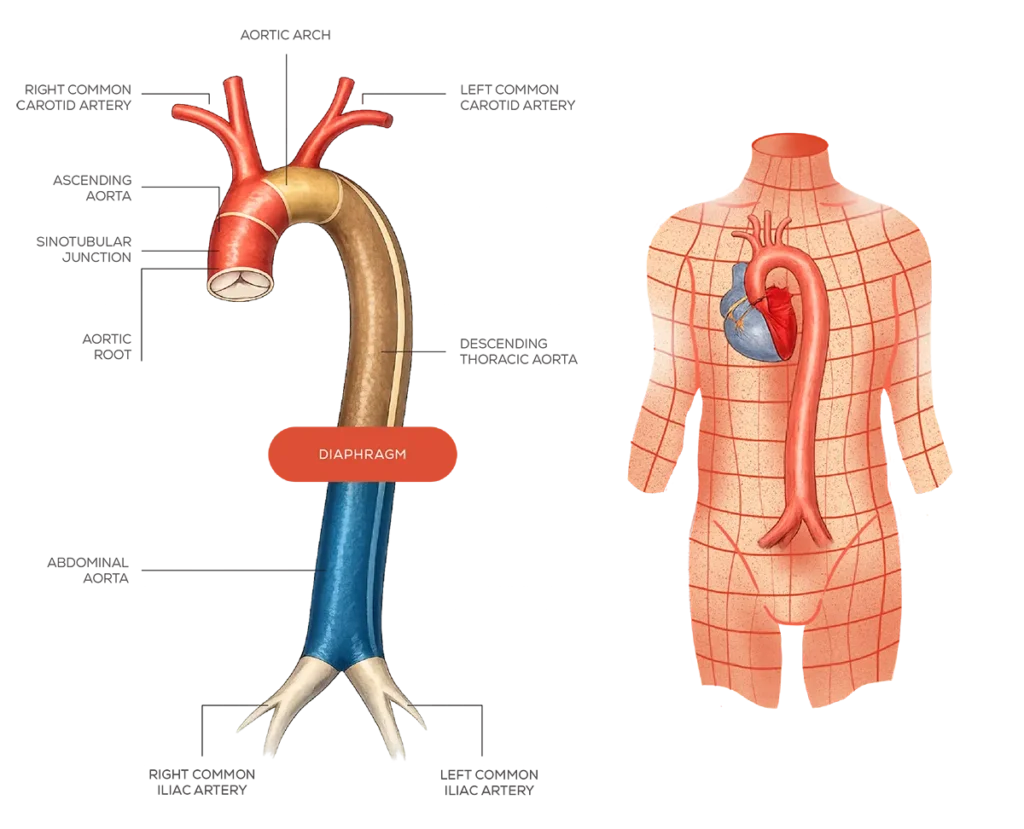
The aorta is the body’s main blood vessel. It delivers oxygenated blood from the heart to the rest of the body. The thoracic aorta is located in the chest cavity. The abdominal aorta is located in the abdomen. The aorta is composed of three layers: the outer layer (tunica adventitia), the middle layer (tunica media), and the inner layer (tunica intima). The tunica media contains smooth muscle cells and collagen fibers and is the main structural layer responsible for the strength and elasticity of the aortic wall. Several genes associated with HTAD, such as ACTA2 and MYH11, provide instructions for the development and function of these smooth muscle cells. When there is a genetic variant, smooth muscle cells may not develop or function normally, which can weaken the aortic wall and increase susceptibility to aortic aneurysm and dissection.
TYPES OF ANEURYSMS.
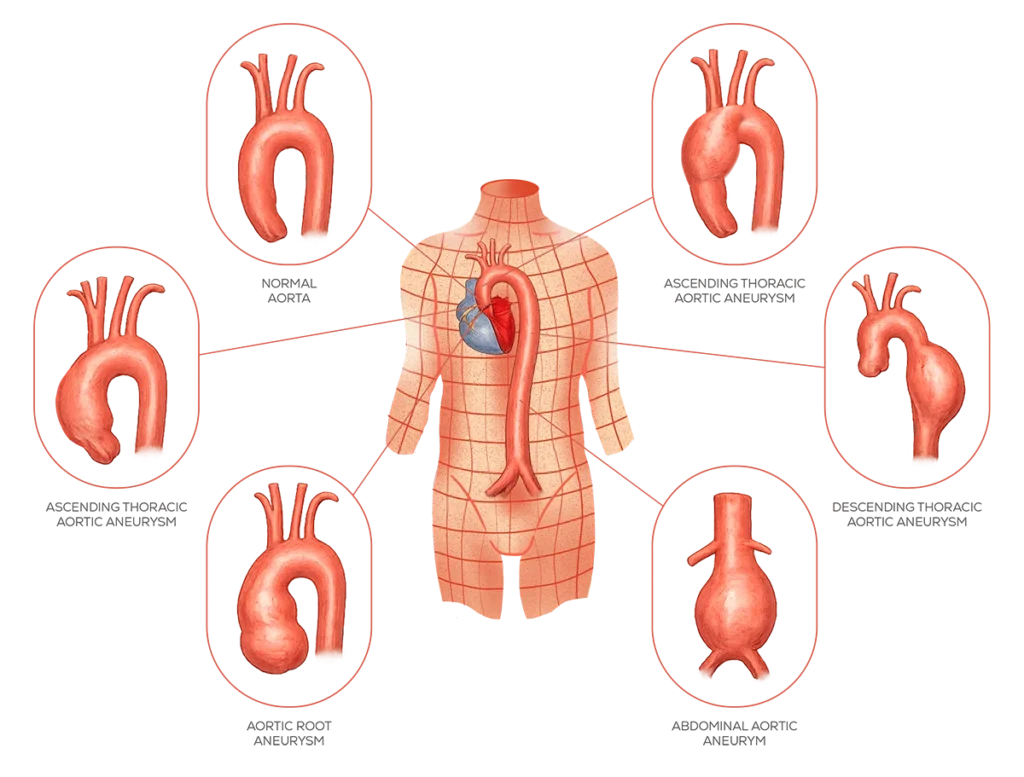
The aorta is the body’s largest artery and extends from the heart through the chest and abdomen. Aortic dilation occurs when a portion of the aorta becomes enlarged. When the enlargement becomes more pronounced, it may form an aneurysm, an abnormal bulging or widening of the aortic wall.”
A thoracic aortic aneurysm (TAA) occurs in the portion of the aorta located within the chest. Approximately 20% of thoracic aortic aneurysms are caused by an identifiable genetic variant (also called a mutation). These genetic forms are known as Heritable Thoracic Aortic Disease (HTAD). Individuals with TAA should be assessed for a hereditary cause.
First-degree relatives (parents, siblings and children) of people with TAA should undergo appropriate screening for aortic disease, such as echocardiography or CT imaging.
Thoracic aortic aneurysms can also occur in people without an identified genetic variant. Other factors that may increase risk include high blood pressure, smoking, elevated cholesterol levels, inflammation of the blood vessels, certain untreated infections such as syphilis, a bicuspid aortic valve, and trauma or injury to the chest.
Abdominal Aortic Aneurysms
An abdominal aortic aneurysm (AAA) occurs in the portion of the aorta located within the belly. Most AAAs that develop after age 65 are not caused by an inherited genetic condition. Instead, they are typically associated with aging and other risk factors.
AAAs are more common in men, and the strongest risk factors include smoking or tobacco use, older age, high blood pressure, high cholesterol, and atherosclerosis (the build-up of plaque within the arteries). While a family history of AAA may increase risk, inherited genetic causes are less common than they are for thoracic aortic aneurysms.
AAAs in younger people—identified before age 50—are rare and can be associated with HTAD. In these situations, an assessment for a hereditary cause is indicated.
Why This Distinction Matters
Understanding whether an aneurysm affects the thoracic or abdominal aorta is important because Heritable Thoracic Aortic Disease (HTAD) primarily affects the thoracic aorta. Identifying a genetic cause can help guide monitoring and treatment decisions, determine when surgery may be appropriate, and identify family members who may also be at risk and benefit from screening.
From Progression to repair
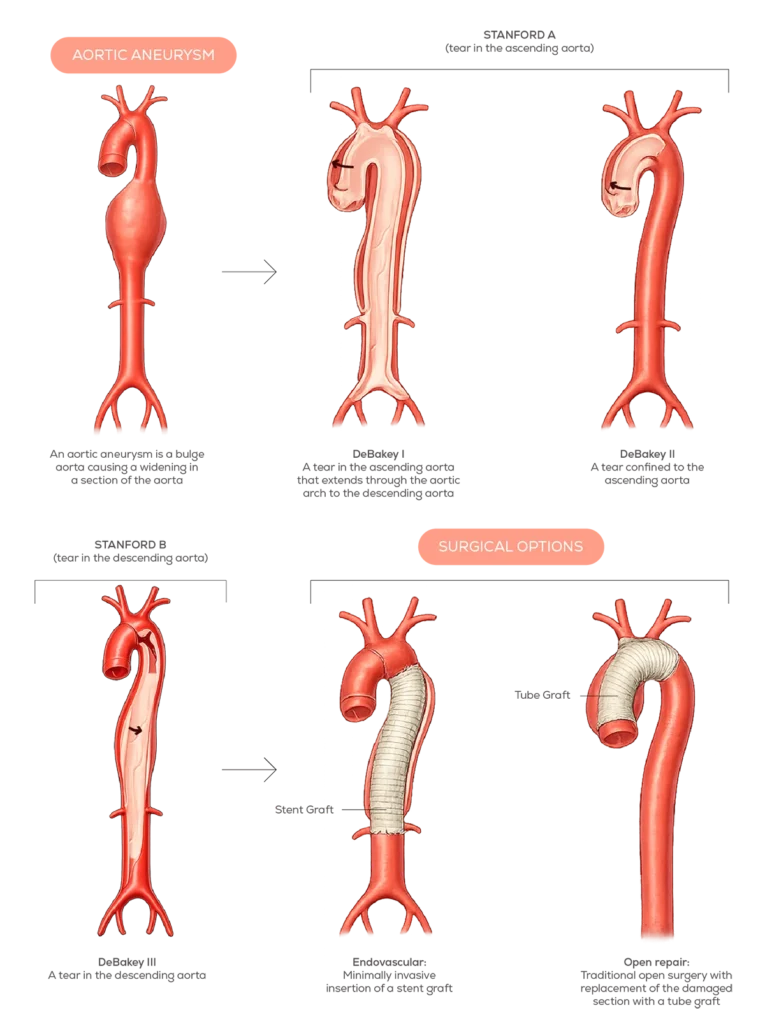
Knowing that you have HTAD can be lifesaving, because it allows doctors to closely monitor your aorta over time. In many HTAD conditions, the aorta may gradually enlarge, a change known as an aneurysm when it reaches a certain size threshold. Regular monitoring helps detect these changes early, allowing timely treatment or surgery to repair the aneurysm to reduce the risk of serious complications such as an aortic dissection.
Thoracic Endovascular Aortic Repair (TEVAR) is a minimally invasive procedure used to treat thoracic aortic aneurysms. Through a small incision in the groin, a surgeon guides a catheter into the aorta and places a stent graft (a metal mesh tube covered with fabric) across the aneurysm. The graft creates a new pathway for blood flow, reducing pressure on the weakened section of the aorta and helping prevent rupture.
Open Aortic Aneurysm Repair is a traditional surgery used to treat an aortic aneurysm. The surgeon makes an incision in the chest or abdomen to remove the weakened section of the aorta and replace it with a durable synthetic tube graft. The graft restores normal blood flow and helps prevent the aneurysm from rupturing.
Data from the MAC Registry help doctors better understand the risks associated with thoracic aortic aneurysms. This information can guide decisions about the optimal timing and aortic size for repair, helping to improve patient outcomes. Data from the MAC Registry help your healthcare team better understand risk, and can guide your care over time. For example, MAC data has informed care by helping surgeons decide how large an aortic aneurysm should be before it needs to be repaired. For example, for those with genetic variants in the FBN1 gene, aneurysms are typically repaired at 5.0 cm or larger whereas for genetic variants in the SMAD3 gene, repair may occur at a smaller size 4.5 cm.