
Genetics of HTAD
- Patients
- /
- Genetics of HTAD
HTAD is caused by changes in genes that play an important role in maintaining the structure and function of the aortic wall. Understanding the genetic basis of HTAD allows for personalized care.
HTAD genes influence how connective tissue is formed, how smooth muscle cells behave, and how biological signaling pathways regulate growth and repair. When one of these genes does not function normally, the aorta may gradually enlarge or become fragile, often without causing symptoms until a serious complication occurs.
Introduction to Genetics
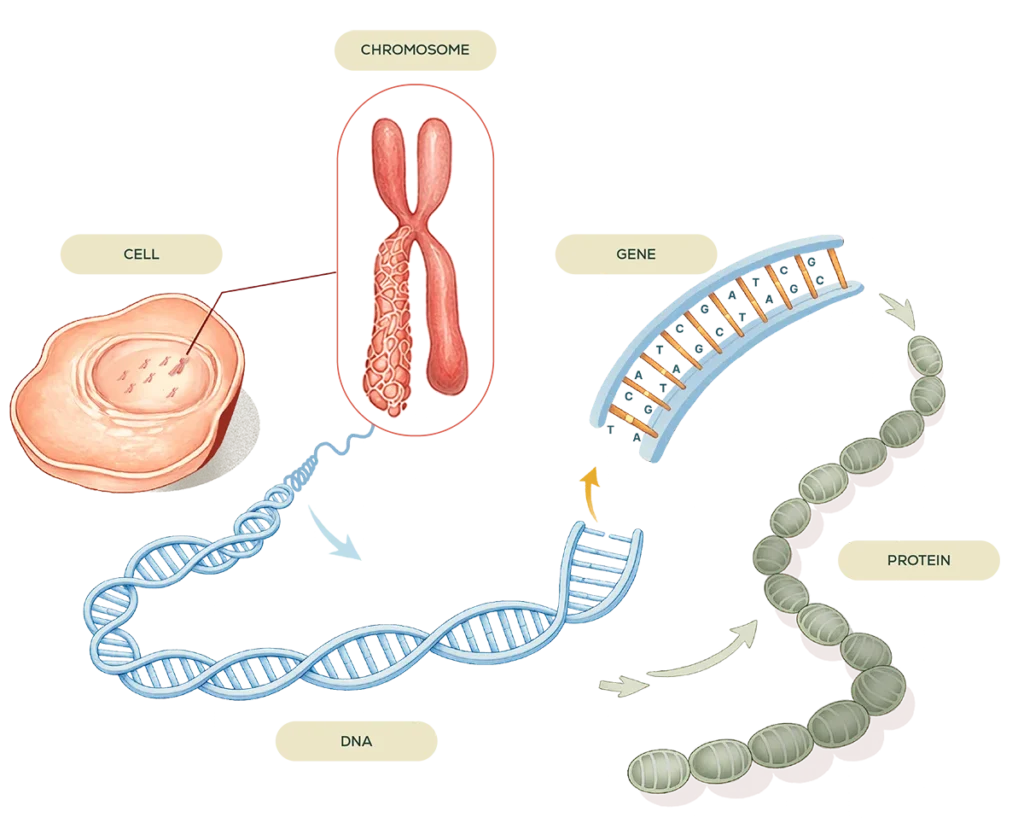
Our genetic information contains the instructions the body uses for growth, development, and normal function. This information is organized into 46 chromosomes, which are arranged in 23 pairs. We inherit one chromosome from each pair from our mother and the other from our father.
Chromosome pairs 1-22 are called autosomes and are the same in biological male and females. The last pair of chromosomes are called the sex chromosomes X and Y. Biological females have 2 X chromosomes. Biological males have an X and a Y chromosome.
Chromosomes are made up of smaller units called genes. Each gene contains a specific set of instructions, like a blueprint, that tells the body how to make a protein, enzyme, or other molecule. Just as chromosomes come in pairs, most genes also come in pairs—we inherit one copy of each gene from our mother and one copy from our father.
Understanding genetic test results
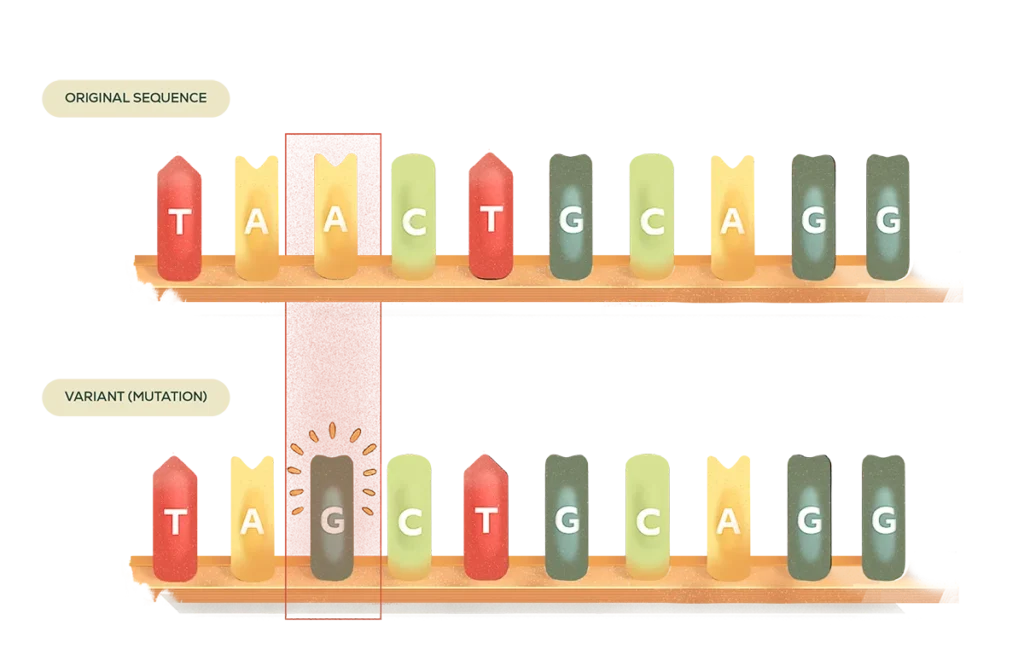
Genes are made of DNA, which consists of a sequence of chemical building blocks called bases, represented by the letters A, C, G, and T. Each gene has its own unique sequence of these bases, similar to how the letters are used to spell a word. Changes in a DNA sequence are called genetic variants. Laboratory scientists use established guidelines and scientific evidence to determine whether a genetic variant is likely to be harmless (benign) or disease-causing (pathogenic).
Likely pathogenic (LP) or pathogenic (P): These variants have strong evidence and cause disease. LP/P variants were formerly called mutations. LP/P variants can be used to test other family members (called predictive genetic testing) to determine if they have inherited the HTAD condition.
Likely Benign (LB) or Benign (B): Much in the way that people's appearance varies so can the sequence of our genes. There are many normal variations in a gene's sequence that do not cause disease. These variants have strong evidence that the scientific community is certain that they do not cause disease.
Variants of unknown clinical significance (VUS): These variants do not have strong evidence to be certain that they cause disease.
These variants are not used for family screening due to the uncertainty of their impact on health and HTAD. Over time the scientific community will learn more about VUSs and their classification may change to LP/P or LB/B.
Discover the full list of genes that have been identified as contributing to (HTAD).

Scientific sources and further reading
- Heritable Thoracic Aortic Disease Overview – GeneReviews®
- Genetics of Heritable Thoracic Aortic Disease – Cardiogenetics
- Clinical validity of genes for heritable thoracic aortic disease – Journal of the American College of Cardiology
- Update on the genetic risk for thoracic aortic aneurysm and dissection – Journal of Cardiovascular Surgery
- Marfan syndrome
- Loeys-Dietz Syndrome - GeneReviews® - NCBI Bookshelf,
- Vascular Ehlers–Danlos syndrome – GeneReviews®